
Do Lien Waivers Need to Be Notarized?
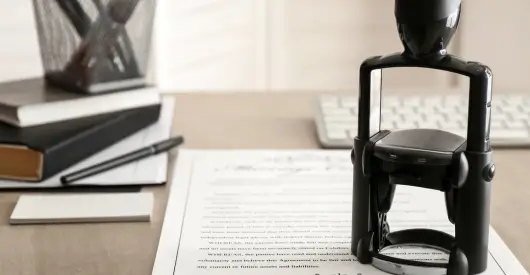
Lien waivers are a routine but vital part of construction payments.
These documents confirm that subcontractors, suppliers, or contractors have received payment and waive their right to file a lien for that amount.
Additionally, they maintain transparent payment processes and protect property owners from future claims.
However, one detail often creates confusion: notarization.
In some states, lien waivers must be notarized to be valid. In others, notarization is not required and can even be restricted to avoid creating unnecessary hurdles.
To make matters more complex, individual contracts may still require notarization even when state law does not.
This article explains when lien waivers need notarization, when they do not, and why some states limit the practice.
It also covers best practices for contractors and subcontractors, so you can stay compliant and avoid payment delays.
What Is a Lien Waiver?
A lien waiver in construction is a document that confirms payment has been received and waives the right to file a mechanics lien for that amount.
A mechanics lien is a legal claim against a property filed by contractors, subcontractors, or suppliers if they are not paid for work or materials.
By signing a lien waiver, the party giving it agrees that they have been paid and will not pursue a lien for that payment.
There are different types of lien waivers, each serving a specific purpose.
A conditional waiver takes effect only once payment clears, while an unconditional waiver is effective as soon as it is signed, even if the funds have not yet arrived.
This is why unconditional waivers should only be signed after the payment is actually received, since signing too early could leave contractors or subcontractors without legal protection.
A progress waiver applies to partial or ongoing payments, and a final waiver is signed at the end of a project to confirm that all payments have been settled.
Because lien waivers are legally binding, accuracy and compliance are essential. Using the wrong form or signing too early can create financial risk.
For a deeper dive into the challenges and solutions related to lien waivers, you can read our guide on the issues and solutions of lien waivers.
Do Lien Waivers Always Need to Be Notarized?
In most states, lien waivers do not need to be notarized.
While they are legal and enforceable without a notary stamp, confusion often arises because some states still require notarization, and others have even restricted it to avoid unnecessary barriers.
Notarization was once common as a safeguard against fraud. The idea was that a notary would confirm the signer’s identity, making the waiver more reliable.
However, with modern digital systems and standardized waiver forms, many states have decided it is no longer necessary.
Even though notarization may not be a legal requirement in most states, some construction contracts still call for it.
Owners or general contractors may request notarized waivers as an added layer of protection, particularly on large or high-value projects.
For subcontractors and suppliers, this means it is always important to review contract terms carefully, since a notarization clause can still apply even if the state does not mandate it.
States That Require Lien Waiver Notarization
While most states do not require lien waivers to be notarized, there are a few important exceptions that contractors and subcontractors should know about.
Mississippi requires notarization when statutory waiver forms are used. This requirement is outlined in Mississippi Code § 85-7-433. Without notarization, these documents are not considered valid under state law.
Wyoming law also makes notarization mandatory. According to Wyoming Statutes § 29-1-301, lien waivers must be notarized to be enforceable. This makes Wyoming one of the few states where notarization is an explicit requirement.
Texas historically required lien waivers to be notarized, but this mandate was removed in 2022 through amendments to the Texas Property Code. Today, digital lien waivers are widely accepted, and notarization is no longer needed. The Texas Construction Association explains that waivers signed before January 1, 2022 under a prime contract had to be notarized, but those executed after this date no longer carry that requirement.
Federal projects differ. Under the Miller Act, lien waivers are not typically required because subcontractors and suppliers are protected by payment bonds instead. On state and local government projects, requirements depend on the statute or contract.
Here’s a quick-reference summary:
| Jurisdiction | Notarization Required? | Notes |
| Mississippi | Yes | Required when using statutory forms |
| Wyoming | Yes | Mandatory under state law |
| Texas | No (since 2022) | Reforms eliminated the requirement; digital waivers standard |
| Federal (Miller Act) | No | Payment bonds replace lien waivers |
States That Restrict Lien Waiver Notarization
While a few states require notarization of lien waivers, others go in the opposite direction. In certain jurisdictions, notarization is not allowed because it can make waivers more difficult to enforce in court.
For example, Arizona, California, Connecticut, Michigan, and Nevada have laws that explicitly restrict notarization. In these states, adding a notary stamp to a lien waiver can actually make the document invalid.
The reason is that state legislatures created very specific waiver forms that contractors and subcontractors must use. Any extra conditions, such as notarization, can be seen as adding unenforceable terms.
For contractors and suppliers working in these states, the safest approach is to stick with the official statutory forms. These forms are designed to protect both payment rights and enforceability. Trying to modify them, even with something as simple as a notary acknowledgment, risks having the waiver thrown out.
Understanding these restrictions is just as important as knowing where notarization is required. It ensures waivers are valid and payments are protected.
Who Is Authorized to Notarize Lien Waivers?
In most states, lien waivers can be notarized by a licensed notary public. These officials are trained and authorized to verify identities and witness signatures. Their role is to confirm that the person signing the document is who they say they are.
In some states, attorneys or court clerks with notarial powers can also notarize lien waivers. This flexibility depends on local laws, which is why contractors should always confirm who is legally allowed to notarize in their state.
Digital notarization is also becoming more common. Known as remote online notarization (RON), it allows a signer to complete the process through a secure video platform.
Moreover, states that permit RON make it easier for contractors and subcontractors to notarize documents without having to be in the same physical location as the notary.
Because the rules differ across states, the safest approach is to review local requirements before finalizing any lien waiver.
Why Does Lien Waiver Notarization Matter?
Notarization matters because it provides proof that a lien waiver is legitimate. It confirms that the right person signed the document and that the signature is authentic. This helps protect all parties from fraud and gives owners and contractors greater confidence in the payment process.
At the same time, notarization has its drawbacks. It can slow down payments because every waiver must be signed in front of a notary. For teams working on tight schedules, these delays can impact cash flow and create extra stress.
Notarization also presents challenges in digital workflows. Many contractors now rely on e-signatures and cloud platforms. Adding notarization to the process can reduce the speed and convenience of these systems.
Because it strengthens trust yet adds complexity, notarization continues to be a debated requirement. Understanding both its benefits and drawbacks helps contractors know when and why it is required.
Risks of Missteps Notarization of Lien Waivers
Lien waivers are only effective when they are executed properly. A simple mistake can create major consequences for contractors, subs, or owners.
In states that restrict notarization, adding a notary stamp can do more harm than good. Instead of adding legitimacy, it may actually invalidate the waiver and make it unenforceable.
On the other hand, in states that require notarization, skipping this step can hold up payment. Owners may refuse to release funds until the waiver is signed and notarized as required by law.
Courts also take these rules seriously. An improperly executed waiver can be dismissed, leaving parties exposed to liens or payment disputes. This creates risk for everyone involved in the project.
To avoid these setbacks, contractors and subs need to understand the specific rules in their state and follow them carefully. Accuracy ensures waivers protect both sides as intended.
You can also read: 3 Reasons General Contractors Can’t Ignore Electronic Payments Anymore.
Best Practices for Contractors and Subs
Managing lien waivers correctly requires both legal awareness and practical steps. The first priority is to confirm your state’s requirements before signing. Rules vary widely, and a waiver that is valid in one state may be invalid in another.
Next, review contract terms carefully. Even if notarization is not required by law, some agreements may still include it as a condition. Using standardized waiver forms is also essential in states that mandate specific language or formats, such as Mississippi.
Where notarization is restricted, avoid adding it unnecessarily, since doing so can make the waiver harder to enforce. Staying aligned with state-specific rules is the best way to protect both contractors and clients.
Finally, consider digital platforms like SuperConstruct, which simplify the process. They standardize lien waiver forms, support e-signatures, and track compliance automatically. This reduces errors, speeds up payment cycles, and keeps projects moving forward.
How Construction Management Technology Helps Simplify the Process
Relying on manual lien waivers often creates avoidable problems.
Paper forms can be misplaced, signatures may be delayed, and errors in formatting or language can invalidate the waiver entirely. These issues slow down payment cycles and increase the risk of disputes.
On the other hand, technology provides a smarter alternative.
Platforms like SuperConstruct automate lien waiver management from start to finish.
They allow contractors to generate accurate forms, capture e-signatures, and track compliance in one place. By eliminating repetitive paperwork, teams spend less time chasing signatures and more time focusing on the project itself.
Digital workflows also add visibility. Everyone involved can confirm the status of a waiver in real time, which reduces misunderstandings and builds trust.
The result is faster payments, fewer disputes, and smoother project delivery.
You can also read: Construction Project Management: Manual Workflow vs. SuperConstruct.
Final Takeaway
Not all lien waivers need to be notarized.
A few states, like Mississippi and Wyoming, still require it, while others, such as California and Arizona, restrict it.
Staying compliant means knowing your state laws and reviewing contract terms carefully before signing.
For contractors and subcontractors who want to avoid mistakes, digital tools can make a big difference.
Platforms like SuperConstruct simplify lien waiver management, autogenerate payment applications, and speed up payment cycles, ensuring waivers are handled quickly and correctly.
Frequently Asked Questions
1. Do all lien waivers need notarization?
No. Most states do not require lien waivers to be notarized. Only a few, such as Mississippi and Wyoming, mandate it under specific statutes.
2. Which states require vs. restrict notarization?
Mississippi and Wyoming require notarization. Texas required it until 2022, but now no longer does. States like Arizona, California, Connecticut, Michigan, and Nevada restrict notarization because it can make waivers harder to enforce.
3. Who can notarize a lien waiver?
Lien waivers are usually notarized by a licensed notary public. Some states also allow attorneys or clerks with notarial powers. Remote online notarization is becoming more common where permitted.
4. Can digital lien waivers be legally valid?
Yes. Many states accept electronic waivers and e-signatures. However, in states that require notarization, contractors must follow statutory rules before a waiver is considered valid.