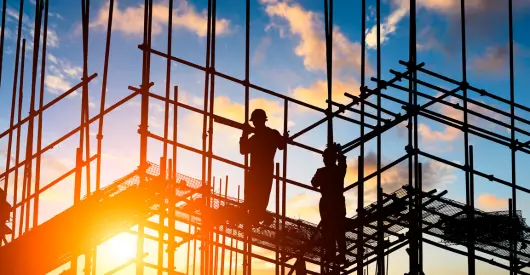
High-value construction projects need careful supervision at all times.
These sites often hold expensive equipment, valuable materials, and strict timelines.
When something goes wrong, it can cause delays, financial losses, and safety issues.
Unfortunately, many sites still rely on part-time monitoring, which leaves room for mistakes and unexpected problems.
Every hour on a construction site matters. Work is either moving forward or losing money. Theft, vandalism, and safety violations can happen quickly and create major setbacks.
According to the data, construction site theft and vandalism cause over $1 billion in losses each year across the United States.
This is why 24/7 monitoring has become essential for today’s projects. Continuous monitoring helps teams spot issues early, respond faster, and keep workers and materials safe.
Also, it improves communication between the field and the office, ensuring everyone knows what is happening on-site.
In the sections ahead, we will look at why high-value construction sites are more at risk, how round-the-clock monitoring reduces those risks, and what technologies are helping contractors protect their projects and stay efficient.
High-value construction sites often attract unwanted attention because of what they hold. Expensive materials like copper, steel, and tools are easy to steal and resell.
Heavy equipment and vehicles can also be targets, especially when left unmonitored overnight.
Vandalism and unauthorized access can cause even more damage. Broken equipment, destroyed materials, and graffiti can delay schedules, raise insurance claims, and hurt a company’s reputation. Each day of downtime adds to overall costs and disrupts progress.
Another major concern is safety and liability. Without constant monitoring, unsafe behavior or unauthorized entry can go unnoticed. This increases the risk of worker injuries, OSHA fines, and potential legal problems.
According to a report, about 75% of contractors have experienced theft or vandalism on their job sites. These incidents not only raise project costs but also slow progress and lower morale across teams.
These risks make it clear that 24/7 monitoring is more than a precaution. It is a necessity for keeping projects safe, reducing delays, and protecting valuable investments.
Continuous monitoring offers more than just protection. It provides a safer, more efficient, and transparent work environment for everyone involved in the project.
| Criteria | Unmonitored Site | 24/7 Monitored Site |
| Theft Risk | High | Reduced by up to 70% |
| Response Time | Delayed | Instant alerts |
| Insurance Costs | Higher premiums | Possible discounts |
| Worker Safety | Limited oversight | Real-time hazard tracking |
When implemented properly, 24/7 monitoring for high-value construction projects doesn’t just stop theft, it improves how teams communicate, react, and plan.
Beyond security, continuous monitoring transforms how construction projects operate each day.
You can also read: What is Project Controls in Construction?
Keeping workers safe is one of the biggest priorities on any construction site.
Continuous monitoring gives project managers real-time visibility, helping them protect crews while keeping productivity steady.
Modern monitoring systems can spot unsafe situations the moment they happen. Missing PPE, blocked paths, or restricted-area entry all trigger instant alerts.
This gives supervisors time to act before anyone gets hurt. It is a simple but powerful way to prevent accidents instead of reacting to them later.
When an incident occurs, such as a fall, collision, or sudden medical issue, smart systems send alerts automatically.
On-site teams or emergency responders are notified right away.
That speed can make a life-saving difference and reduce the severity of injuries.
Continuous monitoring also helps build a stronger safety culture.
Recorded footage allows safety officers to review what went wrong and use that information for retraining.
Looking back at incidents turns mistakes into lessons and helps prevent them from happening again.
According to the U.S. Bureau of Labor Statistics, 20.8% of all workplace fatalities in 2023 occurred in construction. Many of these could have been avoided with better oversight.
For example, AI-powered cameras can detect when a worker falls or stops moving and alert supervisors within seconds. The main idea is that safety and security work together.
Continuous construction monitoring not only prevents injuries but also builds a safer, more compliant, and more efficient job site.
Continuous monitoring does more than improve safety.
Also, it makes construction operations more efficient and financially stable.
When every hour on a site matters, even small disruptions can create major costs.
One of the biggest advantages of live monitoring is avoiding work stoppages.
Early detection of theft, vandalism, or equipment misuse helps teams respond quickly before problems grow.
With faster intervention, projects stay on schedule and avoid costly delays.
Continuous visibility allows managers to catch errors as they happen.
This includes issues like incorrect installations or unsafe equipment handling.
Correcting these mistakes right away prevents material waste, extra labor, and extended project timelines.
The financial return from monitoring systems can be substantial.
For example, a $10,000 monitoring setup once helped a contractor avoid more than $60,000 in equipment replacement costs after stopping a major theft. Avoiding even one incident can often recover the full cost of the system.
According to the Autodesk and FMI Trust and Technology Report, construction sites that use live monitoring experience 30 percent fewer project delays than those without it.
Fewer interruptions mean smoother workflows, better resource management, and stronger profitability.
Moreover, continuous oversight creates a proactive work environment where teams can anticipate problems instead of reacting to them later.
The next step is understanding what powers these systems. Let’s look at the modern technologies that make 24/7 monitoring possible.
Technology has changed the way construction sites stay protected.
Today’s monitoring tools do more than record footage.
They help teams detect risks, make faster decisions, and manage large, complex projects with greater confidence.
Moreover, modern systems combine automation, data, and analytics to keep high-value projects safe and efficient.
AI-powered cameras are now a core part of site monitoring. They scan video feeds to detect movement, intrusions, or unsafe activity automatically.
By separating normal work from possible threats, AI cuts down on false alarms and ensures alerts are accurate and useful.
Drones extend visibility beyond ground cameras by capturing aerial views of large sites. This helps managers spot unauthorized access or unsafe conditions quickly.
Sensors add another layer of protection by monitoring vibration, temperature, or gas levels.
These readings are vital for maintaining equipment and preventing fire, collapse, or other hazards.
Cloud systems allow project teams to monitor live feeds and alerts from any location.
Managers can check updates, confirm site conditions, and coordinate responses in real time, even when they are away from the site.
| Technology | Function | Key Benefit |
| AI Analytics | Detect anomalies | Reduces false alarms |
| Drones | Capture aerial footage | Improves large-area coverage |
| Sensors | Track movement or heat | Adds environmental monitoring |
| Cloud Access | Provide remote dashboards | Enables real-time decisions |
When combined, these tools create a connected monitoring network that improves visibility and accountability.
Their true power comes from being used together as part of a well-planned, 24/7 site monitoring strategy designed for each project’s needs.
A strong monitoring system is only as good as the strategy behind it. For high-value construction projects, round-the-clock oversight takes planning, coordination, and regular improvement to stay ahead of risks.
Every site has its own weak points. Some may store expensive materials, others may have poorly lit areas or high traffic zones.
The goal is to identify these vulnerabilities early. Mapping them helps decide where to place cameras, sensors, and access controls for the best coverage.
No single system can cover every risk. The most effective monitoring strategies use layers of protection.
Cameras, access control systems, smart lighting, and automatic alerts all work together to create a stronger defense. If one layer misses something, another can catch it.
Even the best systems need regular checks. Testing equipment, reviewing access lists, and analyzing incident reports help keep everything reliable.
Tracking this information over time also reveals patterns and allows teams to adjust their response plans before problems grow.
Modern projects benefit from linking video footage with digital documentation tools. Attaching images and videos to reports or inspection logs creates a complete record.
This makes it easier to prove compliance, track safety actions, and maintain accountability across teams.
A 24/7 monitoring strategy should not only prevent problems but also help people work together better.
You can also read: Tracking Projects With Schedules of Values (SOV) Software.
Monitoring systems are only as effective as the teams using them.
The real value comes from how quickly people act on the information those systems provide.
That is where SuperConstruct, construction management software, makes a difference.
It connects live site monitoring with project management tools so that safety, documentation, and decisions all work together in one place.
Key Capabilities of SuperConstruct:
Benefits:
ROI Snapshot
| Project Type | Average Investment | Annual Savings | Efficiency Gain |
| Mid-Scale Commercial | $15K | $45K–$60K | 3× faster reporting |
| Large Infrastructure | $50K | $200K+ | 40% shorter approval cycles |
With SuperConstruct, contractors can connect real-time monitoring with documentation in one streamlined process.
Every report, update, and approval happens faster and more accurately.
By turning monitoring insights into clear, actionable data, SuperConstruct helps general contractors and project managers keep their projects safe, compliant, and on schedule.
You can also read: How to Choose a Construction Management Software.
Large commercial, industrial, and infrastructure projects benefit the most since they involve valuable materials, heavy machinery, and complex schedules.
Continuous oversight helps protect these assets while ensuring smooth operations.
Not entirely. Technology enhances human oversight but does not replace it.
The best results come from combining smart monitoring systems with trained security personnel for faster and more reliable responses.
Real-time surveillance detects hazards, unsafe behavior, or restricted-area breaches instantly.
Automated alerts notify supervisors so they can act quickly and prevent accidents or violations.
Avoiding even a single theft, vandalism incident, or major delay can offset the entire cost of a monitoring system — often returning 3× to 6× the initial investment within the first year.
For instance, preventing one equipment theft (averaging $25,000–$30,000 in losses) can instantly recover setup costs.
In addition, insurers frequently offer 5–15% premium discounts for sites with active 24/7 surveillance, creating sustained savings over the project’s life cycle.
SuperConstruct turns site footage, alerts, and field reports into actionable data.
It stores everything securely in the cloud, integrates it with compliance documentation, and ensures faster, more transparent project oversight.
Automating construction payments helps contractors and developers improve cash flow, reduce delays, increase accuracy, and streamline project operations.
If you’re a project owner in 2026, you already know that the “old way” of building, marked by fragmented spreadsheets, frantic phone calls, and the
In the high-stakes world of construction, time isn’t just money; it’s reputation, liquidity, and the difference between a thriving firm and a struggling one. Yet,
In the world of construction, “surprises” are rarely a good thing. Whether it’s a sudden $50,000 change order or a three-week delay because a subcontractor