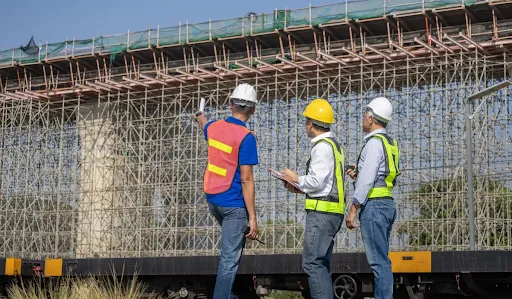
If you've ever driven past a road construction site, watched a new park take shape in your neighbourhood, or noticed crews upgrading water lines along your street, you've witnessed a CIP project in action.
But what exactly is a CIP project? And why does it matter so much for the long-term health of a city or municipality?
In this guide, we'll break it all down, from the definition and purpose to the planning process and real-world examples.
Whether you're a local government official, a curious taxpayer, or a contractor trying to understand how public projects work, this guide has you covered.
CIP stands for Capital Improvement Program (sometimes also called a Capital Improvement Plan).
It refers to a long-range planning document, typically spanning five to ten years, that identifies, prioritizes, and schedules major public infrastructure and facility projects within a city or municipality.
In simpler terms, a CIP is a government's game plan for improving, replacing, or maintaining its physical assets such as roads, bridges, parks, water systems, public buildings, and more.
Each individual project included in that plan is known as a CIP project.
Think about a city like a house. Every year, things wear out, the roof gets old, the plumbing needs an upgrade, and eventually, you need to add a new room for a growing family.
Without a plan, you're always reacting to problems instead of preventing them.
That's exactly the challenge municipalities face, only at a much larger, more complex scale.
According to the American Society of Civil Engineers (ASCE) 2021 Infrastructure Report Card, America's infrastructure received an overall grade of C-, with an estimated investment gap of $2.59 trillion over ten years.
Poor planning and poor visibility into ongoing projects are major contributors to that gap.
A well-structured CIP helps cities avoid this fate by:
Of course, having a plan is only half the battle.
Executing it across dozens of active projects, contractors, budgets, and compliance requirements is where cities most often struggle.
That's where purpose-built tools like SuperConstruct make a real difference, but more on that shortly.
You can also read: How SuperConstruct Helps Construction Teams Stay on Schedule and Budget.
Not every expense qualifies as a CIP project.
Generally, CIP projects involve capital expenditures, meaning they are large, non-recurring investments that create or improve long-term assets.
Most municipalities set a dollar threshold (often between $25,000 and $100,000) below which expenses are treated as operating costs rather than capital projects.
Common CIP project categories include:
Each of these categories comes with its own set of contractors, contracts, inspections, and pay applications, all of which need to stay organized and visible to city leadership throughout the project lifecycle.
You can also read: 4 Ways SuperConstruct Simplifies Construction Documentation.
The CIP process varies by jurisdiction, but most cities follow a structured cycle that typically looks like this:
Departments across the city—public works, parks, utilities, and transportation—submit project proposals based on infrastructure audits, community feedback, and long-term service goals.
This is where the raw list of "what needs to be done" comes together.
Because the demand for improvements almost always exceeds available funding, each project must be ranked.
Municipalities typically use a scoring system that considers factors like:
City finance teams analyze how proposed projects will be funded. CIP funding sources commonly include:
You can also read: 5 Benefits of Automating Construction Payments for Contractors & Developers.
The draft CIP is presented to the city council or governing body for public review, community input, and final adoption.
This is an important step; transparency builds public trust and ensures the plan reflects community values.
Once approved, individual CIP projects move into design, bidding, and construction phases. Progress is tracked against timelines, budgets, and performance metrics.
The CIP is then reviewed and updated annually to reflect shifting priorities, new funding opportunities, and completed projects.
This implementation phase is often where things get complicated: multiple contractors working simultaneously, change orders piling up, inspections needing sign-off, and pay applications requiring review.
Managing all of that through spreadsheets and email chains is a recipe for delays, cost overruns, and lost accountability.
A centralized platform designed specifically for cities and municipalities eliminates that friction.
You can also read: Why Contractors Are Switching to AI-Powered Construction Management Software.
This is a question that trips up a lot of people, even those in local government.
The operating budget covers the day-to-day costs of running city services: salaries, supplies, utilities, and routine maintenance. These are recurring, annual expenses.
The CIP, on the other hand, covers large-scale, one-time investments that extend the life or capacity of infrastructure, typically assets with a useful life of 10 years or more.
Here's a practical example: Painting the walls of a fire station is an operating expense, while building a new fire station is a CIP project.
The distinction matters because capital projects are often funded through debt (bonds), while operating costs are funded through tax revenues. Mixing the two without clarity can create serious long-term budget problems.
Even well-run municipalities run into obstacles. Some of the most frequent challenges include:
The good news is that modern construction management platforms are designed specifically to solve these challenges at the city level, bringing all stakeholders, documents, and workflows into one connected system.
Managing a portfolio of capital improvement projects is genuinely hard.
Between tight budgets, public scrutiny, contractor coordination, and compliance requirements, city project managers are constantly pulled in multiple directions.
That's why more municipalities are turning to SuperConstruct, a cloud-based construction project management platform built for exactly this kind of work.
SuperConstruct gives cities and municipalities one connected system to plan, track, and manage every CIP project from start to finish.
Here's what that looks like in practice:
The result? Less chaos, more accountability, and capital projects that stay on time and on budget.
You can also read: How Developers Can Manage Multiple Projects Efficiently With Construction Management Software.
Consider a mid-sized city with aging water infrastructure.
The public works department flags that roughly 40% of its water mains are over 50 years old, creating a growing risk of failures, service disruptions, and water loss.
Through the CIP process, the city:
Without the CIP framework, and without the right tools to execute it, this problem might not surface until a major main rupture forces an emergency repair, costing significantly more and disrupting service to thousands of residents.
A CIP project is more than just a construction job; it's a strategic investment in the quality of life for a community.
When cities and municipalities approach capital planning with discipline, transparency, and long-term thinking, the results speak for themselves: safer roads, reliable utilities, vibrant public spaces, and stronger fiscal health.For residents, understanding what a CIP is gives you a powerful tool: the ability to participate meaningfully in public planning processes, advocate for your neighborhood's needs, and hold your local government accountable.
For government professionals, a well-executed CIP isn't just good governance; it's one of the most direct ways to build lasting trust with the communities you serve.
And with the right platform supporting your team, executing that plan becomes a whole lot more manageable.
Managing capital improvement projects doesn't have to mean drowning in spreadsheets, chasing down contractors, or scrambling to pull together reports for your next council meeting.
SuperConstruct is purpose-built for cities and municipalities like yours, bringing every project, contractor, document, and dollar into one intelligent platform.
From automated pay applications to AI-powered project insights, it's everything your team needs to deliver CIP projects with confidence.
Book Your Free Demo Today! See firsthand how SuperConstruct helps cities stay on budget, on schedule, and always in control.
Construction management software enables developers to manage budgets, timelines, and teams across large-scale developments.
Contractors are switching to AI-powered construction management software to improve scheduling, reduce delays, control costs, and boost efficiency.
Automating construction payments helps contractors and developers improve cash flow, reduce delays, increase accuracy, and streamline project operations.
If you’re a project owner in 2026, you already know that the “old way” of building, marked by fragmented spreadsheets, frantic phone calls, and the