6 Common Types of Construction Projects
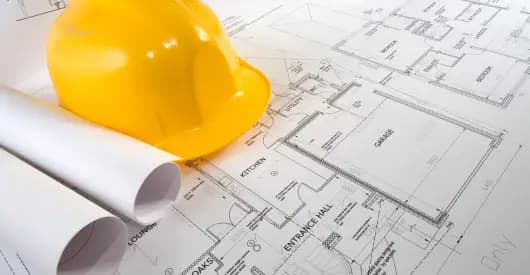
Walk past any construction site and you’ll catch a glimpse of something bigger: a growing city, an evolving economy, or maybe even a changing way of life.
From suburban cul-de-sacs to 80-story downtown towers, construction shapes the way we live, work, and move.
However, not all construction is built the same. No two projects are alike. Each one involves different people, goals, and obstacles.
So, let’s break down the six major types of construction and why understanding the differences matters, whether you’re a general contractor, a project manager, or just someone who’s curious about what’s rising up down the street.
1. Residential Projects

Think homes, not houses. Residential construction is about creating places where people live: single-family homes, townhouses, apartment buildings, and condominiums.
Therefore, it’s personal, emotionally charged, and often subject to tight timelines and tighter budgets.
What makes residential unique?
Beyond zoning laws and permits, it’s the high number of changes that happen during the project.
However, homeowners often make new decisions once construction is already underway—like switching materials, updating layouts, or adding features, so crews have to stay flexible and adapt on the fly.
Labor on residential buildings also tends to be more local, with smaller teams familiar with the area.
In the end, success depends on finding the right balance between staying on budget and delivering high-quality work that feels personal..
2. Commercial Projects
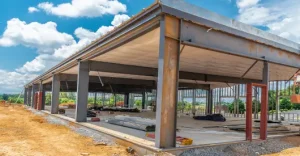
From high-rise office buildings to big-box retail centers, commercial construction is all about business. These projects are larger, more complex, and heavily driven by ROI.
Unlike residential projects, commercial projects usually involve institutional investors, architects, and multiple tiers of subcontractors.
There’s little room for error; tight budgets, fixed deadlines, and high financial stakes make every decision count.
Here, the emphasis is on logistics like tight scheduling of trades, bulk procurement, and long-term durability.
Moreover, efficient project tracking isn’t optional anymore; it’s a core part of staying on schedule and under budget.
3. Mixed-Use Projects
Urban planners love them. Developers bank on them.
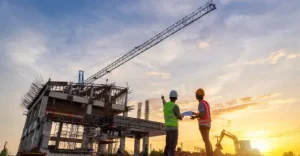
Mixed-use construction brings together different types of spaces, like homes, shops, and public areas, into a single development. These are the “live-work-play” neighborhoods you often see in city centers.
The main challenge? Coordination. Different codes, occupancy requirements, mechanical systems, and timelines must be harmonized.
One part of the project might be near completion while another is just starting foundation work.
Also, there’s financial pressure. If a commercial tenant can’t open on time, the developer could lose significant revenue.
Mixed-use projects succeed when teams communicate across disciplines and use integrated systems to stay aligned.
4. Institutional Projects
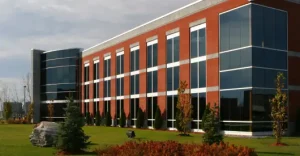
Hospitals. Schools. Courthouses. Museums. These are projects built for the public good, often funded by government or non-profits, and often governed by a mountain of regulations.
Institutional construction requires precision, transparency, and long-term durability. A school, for example, must be completed before the academic year begins.
A hospital must meet complex healthcare regulations. Additionally, in some cases, buildings must remain partly open during renovations.
Bureaucracy is a big factor, too. Approvals can stall projects, and public accountability means documentation must be airtight.
Because of that, reliable tools that log actions and approvals become key to keeping things moving and defensible.
5. Industrial Projects
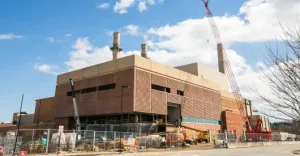
Industrial construction includes power plants, factories, warehouses, and refineries.
These facilities are highly technical, use specialized equipment, and have strict safety and engineering requirements..
Here, delays can have massive ripple effects.
For example, if a distribution center opens late, an entire supply chain can be disrupted.
These projects have to meet important safety and environmental standards set by government agencies.
That means teams need to plan every detail carefully and make sure the work is safe for people and the environment.
The productivity stakes are high: according to McKinsey, global construction productivity has lagged at just 1% growth per year over two decades, far below the 3.6% growth in manufacturing.
Better project management in industrial construction could help close that gap and unlock $1.6 trillion in added value annually.
That’s why industrial construction demands precision at every stage. These aren’t just buildings, they’re engines of the economy.
6. Civil & Infrastructure Projects
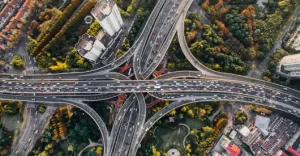
Bridges. Roads. Airports. Tunnels. These are the backbone of our cities, and some of the most complex and costly projects on Earth.
Civil construction is highly visible, heavily regulated, and subject to public scrutiny. It often faces challenges like weather delays, rerouting utilities, traffic interruptions, and environmental reviews.
Moreover, these projects require long-term forecasting and coordination across multiple government agencies.
In these cases, software has to do more than monitor timelines and budgets…it must support collaboration between government bodies and ensure public trust.
You can also read: 4 Reasons General Contractors Are Winning with Construction Tech.
Conclusion
Not all construction is created equal. Each sector comes with its own technical, regulatory, and logistical complexities.
But one thread connects them all: the need for smarter project management.
Not all construction is created equal. Each sector brings its own set of technical challenges, regulations, and coordination hurdles.
But across every type, whether it’s a small home renovation or a billion-dollar highway, one thing stays the same: the need for efficient, organized project management.
That’s where digital tools like SuperConstruct can make a real difference.
By simplifying payments, documentation, and team coordination, platforms like this help teams stay focused on building and not chasing paperwork.
As the industry continues to evolve, smarter workflows aren’t just a competitive edge; they’re a necessity.