7 Key Impacts of AI in Construction Project Management
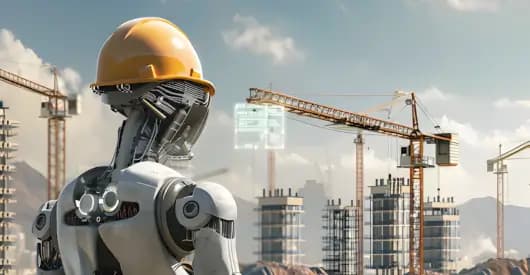
Artificial intelligence in construction has quietly become part of everyday work.
Not because teams want new technology for its own sake, but because the work has become harder to manage without better support.
Construction projects generate massive amounts of data.
For example, schedules shift, costs change, inspections stack up, and multiple teams need the same information at the same time.
Moreover, timelines are tight, coordination is complex, and the margin for error keeps shrinking.
As a result, project managers face constant pressure to control costs, manage risk, and stay compliant while keeping work moving forward.
This is where AI in construction starts to matter.
In construction, AI works best as a support system. It helps teams process information faster, spot issues earlier, and stay organized across projects.
However, it does not replace project managers.
Instead, it gives them better visibility and clearer insight so they can make stronger decisions.
To understand why AI is gaining traction, it helps to look at what AI actually means in a construction project management context.
What AI in Construction Project Management Means
In construction project management, artificial intelligence is not a single tool or feature.
It is a set of capabilities that help teams analyze information and act on it more effectively.
At its core, AI focuses on pattern recognition across project data.
It looks at schedules, budgets, RFIs, types of construction inspections, and historical outcomes to identify trends that are easy to miss when data is spread across systems.
AI also supports forecasting.
By analyzing past and current conditions, it can help predict schedule delays, cost risks, and potential compliance issues earlier in the project lifecycle.
In addition, AI automates repetitive analysis and reporting tasks.
This includes construction document management, summarizing updates, and checking data for inconsistencies, which frees up time for project managers to focus on coordination and decision-making.
Moreover, what sets AI apart from traditional construction software is its ability to learn and adapt.
Instead of relying only on static rules or manual inputs, AI improves as more data becomes available and conditions change in real time.
At the same time, AI does not replace project manager judgment or remove accountability. Final decisions still rest with people.
AI works best when paired with structured workflows and reliable data that teams already trust.
With that foundation, we can look at where AI is already making the biggest impact on construction project management.
7 Key Impacts of AI in Construction Project Management
1. Smarter Project Scheduling and Faster Updates
AI helps teams analyze schedules and critical path logic much faster than manual methods.
When delays occur, AI can model different scenarios and show how changes affect downstream activities.
This makes it easier to adjust sequencing and resources without rebuilding the construction schedule of values from scratch.
When project information is kept up to date and shared across teams, schedule changes are reflected faster and with less confusion between the field and the office.
2. Risk Identification and Predictive Analysis
AI is especially useful for identifying risks early.
By analyzing historical project outcomes alongside live data, it can highlight patterns related to weather impacts, safety incidents, inspection delays, or sequencing conflicts.
Moreover, this gives teams more time to respond before issues escalate into delays or cost overruns.
The earlier risks are visible, the more options teams have to manage them effectively.
3. Design Coordination and Planning Support
AI supports better design coordination by helping teams review drawings, track RFI in construction, and understand the impact of design changes more quickly.
In projects that use Building Information Modeling, or BIM, AI can help validate designs and detect clashes between systems like structural, electrical, and plumbing before construction begins.
Moreover, BIM is a digital model of the project that shows how all building components fit together.
Faster access to coordinated design information reduces rework and improves communication between designers, engineers, and construction teams.
You can also read: 4 Ways Construction Technology Transforms Project Collaboration.
4. Cost Forecasting and Budget Control
AI allows teams to compare planned costs against actual spending much earlier in the project.
Instead of waiting for month-end reports, it can flag unusual cost trends, potential overbilling, or budget gaps as they appear.
This helps project and finance teams address issues sooner and maintain better control over budgets throughout the project lifecycle.
You can also read: How to Reduce Costs in a Construction Project Without Compromising Quality?
5. Supply Chain and Materials Planning
AI supports materials planning by analyzing schedules, usage patterns, and delivery history.
This helps teams anticipate shortages and align deliveries more closely with when materials are actually needed.
Better forecasting reduces downtime caused by missing materials and helps keep work moving according to plan.
You can also read: What is Supply Chain Management in Construction?
6. Safety Monitoring and Workforce Oversight
AI can help identify safety risks by analyzing patterns across inspections, reports, and incident data.
This allows teams to focus training and corrective actions where they are most needed.
Moreover, clear visibility into safety trends supports a more proactive approach to jobsite safety.
7. Oversight Across RFIs, Inspections, and Change Activity
AI can summarize outstanding RFIs, inspections, and unresolved comments, giving project managers a clearer view of what is affecting progress.
When schedule data, inspection results, and change activity are connected, teams can better understand which issues are driving delays.
This level of oversight helps reduce blind spots on complex projects.
As these applications continue to expand, one thing becomes clear: AI delivers the most value when it is working with accurate, well-organized project information.
Without that foundation, even the most advanced tools struggle to produce reliable insights.
You can also read: What are RFI, RFQ, and RFP in Project Management?
The Role of Data and Structure in AI-Driven Construction
AI is only as reliable as the data it analyzes. In construction, that’s often the hardest part.
Project information is frequently spread across disconnected systems, spreadsheets, emails, and PDFs.
Moreover, documentation standards vary by team, and manual handoffs between the field, project management, and finance introduce delays and errors.
When data is fragmented or inconsistent, even advanced AI tools struggle to deliver useful insight.
According to G2’s construction technology analysis, inefficiencies and cost overruns are commonly linked to fragmented tools and poor data integration across teams.
This lack of structure makes it harder for project teams to see risks early or respond quickly when conditions change.
That’s why structure matters.
AI performs best when it works with consistent schedules, standardized pay apps, organized RFIs, and clearly documented inspections. The same applies to financial and compliance records.
When information follows repeatable workflows and lives in a single system of record, AI can analyze trends, surface risks, and support better decision-making.
In short, AI doesn’t fix messy processes. It amplifies whatever structure already exists.
Clean data and consistent workflows are what make AI reliable and useful on real construction projects.
How SuperConstruct AI Features Help in Construction Project Management
AI works best when it supports people, not when it tries to replace them.
SuperConstruct is built with that idea in mind.
However, it does not replace project managers, and it does not automate decisions without context.
Instead, it organizes project data so AI can surface useful insight that teams can trust and act on.
At the center of this approach is the AI Companion.
Teams can ask simple, natural-language questions like “Show all active projects over $5M,” “Which contractors haven’t submitted pay apps?” or “Summarize pending inspections.”
Instead of searching through reports or spreadsheets, teams get clear answers drawn from real project data.
SuperConstruct also includes an AI Pay App Auditor.
Before a pay application is submitted, AI reviews G702 and G703 values, checks retainage, and flags potential overbilling or inconsistencies.
This helps teams catch issues early and avoid delays during review and approval.
Additionally, the AI Compliance Assistant focuses on risk and readiness.
It highlights missing insurance documents, helps generate audit summaries, and supports compliance reporting without manual backtracking.
Also, AI-powered message and oversight summaries condense discussions, RFIs, inspections, and open issues into clear, readable updates so nothing important gets buried.
- For project managers, this means faster insight without digging through systems.
- Operations teams spend less time coordinating manually.
- Finance and compliance teams work with cleaner, more reliable data.
As AI in construction becomes more common, platforms that emphasize structure, clarity, and responsible use will be essential for turning insight into better project outcomes.
You can also read: How to Choose a Construction Management Software?
Conclusion
Artificial intelligence in construction project management is no longer a future concept.
It is already shaping how teams schedule work, track costs, manage risk, and stay on top of growing volumes of project information.
But AI delivers real value only when it is applied with purpose and grounded in day-to-day construction workflows.
Moreover, the most effective uses of AI focus on support, not replacement.
By helping teams analyze data faster, surface risks earlier, and reduce manual reporting, AI gives project managers clearer insight without taking decision-making out of their hands.
At the same time, AI depends heavily on structure.
Without consistent schedules, organized pay applications, clean RFIs, and reliable compliance records, even advanced tools struggle to produce useful results.
That is why platforms that prioritize data clarity and workflow consistency play an important role in AI-driven construction management.
By organizing project information and making it easier to access, review, and analyze, tools like SuperConstruct help teams apply AI responsibly and with confidence.
As construction projects grow more complex and expectations continue to rise, teams that combine disciplined processes with practical AI support will be better positioned to manage risk, control costs, and deliver predictable outcomes.
Frequently Asked Questions
Q. How is AI used in construction project management today?
AI is used to analyze project data, identify patterns, and surface insights faster than manual review. In construction project management, this includes schedule analysis, cost tracking, risk identification, compliance monitoring, and summarizing large volumes of project information. The goal is to support better decisions, not automate them away.
Q. Does AI replace project managers or construction teams?
No. AI does not replace project managers, superintendents, or finance teams. It supports them by handling repetitive analysis, organizing information, and highlighting issues that need attention. Final decisions, judgment calls, and accountability still belong to people.
Q. What kind of data does AI rely on in construction projects?
AI relies on structured project data such as schedules, pay applications, RFIs, inspections, financial records, and compliance documents. The more consistent and centralized this information is, the more useful AI-driven insights become.