What is Schedule of Values (SOV) in Construction?
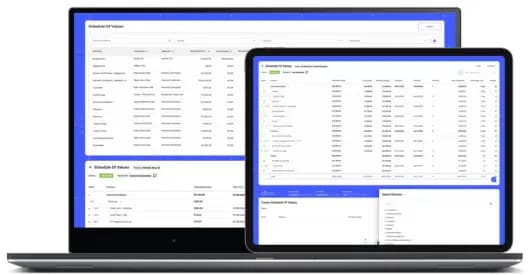
In construction, the Schedule of Values (SOV) is a detailed list that breaks down the total contract price into smaller portions of work. Each portion is assigned a dollar value.
This list acts like a roadmap for billing and payment throughout the project.
The Schedule of Values in construction makes it clear how much each task or deliverable is worth. Contractors submit progress billings based on these values as work is completed.
For project owners, subcontractors, and lenders, this creates a shared reference for tracking payments and project milestones.
To fully understand the importance of an SOV, it helps to look at how construction payment workflows normally function in the construction industry.
Understanding Payment Workflows in Construction
Construction payment cycles often follow a similar process. A contractor completes part of the work. They then submit a payment application to the project owner or lender.
This request includes supporting documents such as invoices, receipts, and proof of completed work.
The owner or lender reviews the payment request. If everything matches the approved construction SOV, they release payment to the contractor. The contractor then pays subcontractors and suppliers.
Without a clear SOV construction format, this process can slow down and lead to disputes.
Everyone needs to agree on what has been completed and how much it is worth. The SOV provides that structure, making it easier to link payments directly to progress.
You can also read: What is a Payment Bond in Construction?
How a Schedule of Values Works in Construction
The Schedule of Values in construction projects is typically prepared at the start of the job. The contractor submits it to the project owner or architect for approval.
Each line in the SOV represents a specific scope of work.
For example, site preparation, foundation, framing, roofing, and finishing might each be separate line items.
Moreover, each one has a cost that reflects its share of the total contract value.
As work moves forward, the contractor updates the SOV to show the percentage completed for each line item. Payment requests are then based on these updates.
This ensures that payments match real progress rather than estimates or guesswork.
Why Accuracy in SOVs Matters
Errors in the Schedule of Values construction document can lead to delays, disputes, and cash flow problems.
According to DocuClipper, data entry without a verification step can have an error rate of up to 4 percent. That is four mistakes for every 100 entries.
In a high-value project, even small mistakes can lead to thousands of dollars in losses.
An inaccurate SOV can slow payment approvals and cause disagreements between contractors and owners.
Also, payment delays affect subcontractors and suppliers who depend on steady cash flow.
Using a digital platform like SuperConstruct reduces manual entry errors by adding a verification layer. This keeps data accurate, speeds up approvals, and helps prevent costly misunderstandings.
You can also read: Solving Common Issues with Construction Pay Applications.
Key Benefits of a Well-Managed SOV in Construction
A well-prepared and accurate SOV in construction benefits everyone involved in the project.
- For owners: It offers a transparent view of progress and cost allocation. Owners can see exactly where the budget is going and confirm that payments align with completed work.
- For contractors: It simplifies billing and supports faster approvals. Contractors can submit progress billings with confidence, knowing the breakdown is clear and accurate.
- For subcontractors and suppliers: It helps ensure they are paid promptly for their work and materials.
When everyone works from the same SOV construction format, payment disputes become less likely, and trust grows between all parties.
You can also read: Uncovering the Hidden ROI of Construction Payment Software.
Common Challenges with SOVs
Even experienced contractors face challenges when creating and updating an SOV. Common issues include:
- Vague line items that make it hard to measure progress.
- Missing or incomplete updates that slow billing.
- Manual errors in calculations or entries.
- Delays in approval due to unclear documentation.
These issues can disrupt construction payment workflows and make budget tracking more difficult.
How Technology Improves SOV Management
Digital construction management software simplifies the creation, updating, and tracking of the Schedule of Values. Automation calculates line items accurately and connects them to real progress data.
A platform like SuperConstruct allows contractors to automate construction payment applications, store documentation in one location, and share updates instantly with project owners.
This real-time visibility reduces back-and-forth communication and speeds up payment approvals.
By removing repetitive manual steps, these tools also reduce data entry errors. This leads to faster payments and stronger relationships between contractors, owners, and suppliers.
You can also read: 4 Ways Construction Technology Transforms Project Collaboration.
Final Takeaway
The Schedule of Values in construction is more than just a billing document.
It is a critical tool for tracking progress, managing budgets, and keeping payments on schedule.
Accuracy is essential. Even a small error can cause payment delays and disputes.
Moreover, forward-thinking construction professionals use construction management software to boost productivity, keep their SOVs accurate, their payments timely, and their projects moving forward.
With SuperConstruct, you can streamline coordination, automate payment applications, and maintain visibility at every stage of the project, helping you finish on time, stay within budget, and keep every stakeholder aligned.
Frequently Asked Questions
1. What does SOV mean in construction?
In construction, SOV stands for Schedule of Values. It is a detailed breakdown of the total contract amount into separate line items that represent specific phases or tasks. The SOV is used to track progress and determine payment amounts during the project.
2. Why is a Schedule of Values important?
A Schedule of Values ensures transparency in the payment process. It helps project owners, contractors, and subcontractors agree on the value of completed work and prevents disputes over billing. An accurate SOV also speeds up payment approvals and supports better project cash flow.
3. How can technology improve construction SOV accuracy?
Technology reduces manual data entry errors and keeps the SOV updated in real time. Platforms like SuperConstruct link SOV data with payment applications, change orders, and progress reports, making it easier to track work, share updates, and avoid delays.